
A true tallow face cream recipe has three chapters: render slow, whip cold, infuse with intention. Our great-grandmothers knew all three by heart, and there’s a deep satisfaction in learning them yourself — so here is the complete old-world method, honestly told, including the part most recipes skip: what it actually costs you in hours, and when letting a small-batch maker do the slow work is the wiser ritual.
What You’ll Need
- 1 lb grass-fed, grass-finished beef suet — the clean fat from around the kidneys. Ask a local farmer or butcher; the sourcing is half the recipe (here’s how to judge quality).
- A heavy pot or slow cooker, cheesecloth, and a glass jar.
- Optional but transformative: ¼ cup olive oil, a spoonful of dried calendula, lavender, or nettle, and a hand mixer for the whip.
Chapter One: Rendering the Tallow
- Chop or grind the cold suet small — the finer, the cleaner the melt.
- Set it in the pot on the lowest heat you own with a splash of water to guard the bottom. Low and slow is the whole religion: hours, not minutes, never a simmer.
- When the solids sink golden and quiet, strain through cheesecloth into your jar. What pours through is liquid gold; what stays behind fed centuries of farm dogs.
- Let it set. Good tallow cools to a creamy white with barely any scent.
Chapter Two: The Herbal Infusion (Optional, Wonderful)
While the tallow sets, warm your olive oil with the dried herbs on the gentlest heat for a patient hour or three, then strain. This is exactly how we build the heart of our own jar — though we take six herbs and considerably more patience about it.
Chapter Three: The Whip
- Let the tallow soften to cool-room temperature — structured but yielding.
- Add your infused oil (about 1 part oil to 4 parts tallow) and a few drops of vitamin E if you have it.
- Whip in bursts, scraping down, until it doubles into soft peaks — five minutes of pure alchemy.
- Jar it, lid it, keep it cool and dark. Use within a few months; your nose will tell you.
The honest math: sourcing good suet + rendering (3–5 hrs) + infusing (1–3 hrs) + whipping and cleanup ≈ a full afternoon, minimum, for your first batch — plus the learning curve of scent and texture. A beautiful craft. Not a small one.
DIY or Buy? Both Are the Old Way
Hear us clearly: we love when people learn this craft — it’s how our own apothecary began. And, some seasons of life don’t have a free afternoon for rendering fat. That’s what small-batch makers are for. Our Herbal Whipped Beef Tallow is this exact recipe carried to its fullest: grass-fed and finished suet, six herbs slow-infused (nettle, calendula, lavender, witch hazel, black seed, rosehip), mango butter for the cloud-soft whip, vitamin E, and a whisper of vanilla.
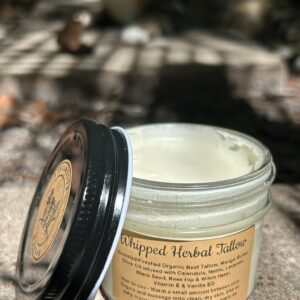
The Afternoon, Already Spent For You
Every jar is the full slow method — rendered, infused, and whipped in small batches.
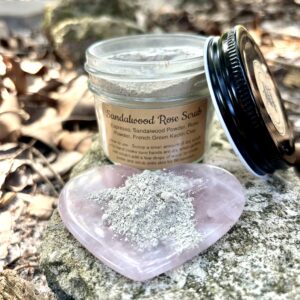
And if you fall in love with powder-and-paste craft, the ritual continues in our Sandalwood Rose Face Scrub — the exfoliating companion to a well-fed face:
Frequently Asked Questions
Can I make tallow cream without a mixer?
Yes — a whisk and a strong arm made every jar before 1920. Soften the tallow well and expect a workout; the peaks come, just slower.
Why does my homemade tallow smell beefy?
Almost always the rendering ran too hot, or the fat wasn’t suet, or it wasn’t strained finely enough. Low heat, kidney suet, double cheesecloth — the three fixes for nearly every scent problem.
How long does homemade whipped tallow last?
A few months in a cool, dark cupboard — longer with vitamin E whipped in. If the scent turns crayon-like or sour, the batch is done.
Can I use coconut oil instead of olive oil in the whip?
You can — it firms the texture and suits warm-climate jars. Olive carries herbal infusions beautifully, which is why the old recipes (and ours) lean on it.
Sources & Further Reading
- USDA FoodData Central — beef tallow composition and stability.
- MedlinePlus: Herbal Medicine — handling botanical infusions safely.
From the Apothecary
These statements are shared in the spirit of traditional wisdom and have not been evaluated by the Food & Drug Administration. Our products are not intended to diagnose, treat, cure, or prevent any disease. Consult your care provider before use if pregnant, nursing, or taking medications.