The best beef tallow for skin starts long before the jar — it starts in the pasture. Tallow has become skincare’s favorite rediscovery, and with that comes a flood of jars that look the same on a shelf but are worlds apart on your face. Here’s the plain-spoken guide to telling them apart: what the labels mean, what actually matters, and the questions worth asking any maker — including us.
Why the Source Animal Decides Everything
Tallow is rendered suet, and suet is a storage fat — it keeps what the animal ate. A cow raised on pasture stores the pasture: fat-soluble vitamins A, D, E, and K and a fatty-acid profile your skin recognizes as kin. A cow finished on grain stores something duller.
That’s why the two words to look for are grass-fed AND grass-finished. “Grass-fed” alone is a half-promise — nearly all cattle begin on grass; the question is how they end. Only “finished” tells you the pasture went all the way to the jar.
Label translation: “grass-fed” = started on grass. “Grass-fed & grass-finished” = lived on grass. Only the second carries the full nutrient story. (Fatty-acid and nutrient background: USDA FoodData Central)
The Best Beef Tallow for Skin: A 5-Point Checklist
- Grass-fed & grass-finished suet — not trim fat, not mystery “beef fat.” Suet, the clean fat from around the kidneys, renders the purest.
- Slow, low rendering — high industrial heat and deodorizing strip the delicate vitamins that make tallow worth using. Small-batch, low-and-slow keeps them.
- A short, honest ingredient list — if the jar reads like a chemistry exam, it isn’t tallow skincare anymore. Every added ingredient should have a job.
- Whipped with intention, not filler — some makers stretch tallow with cheap oils. Partners like mango butter or herb-infused olive oil should add to your skin, not just to the volume.
- A maker who answers questions — where’s the suet from? How is it rendered? Small makers know. Big labels have a customer-service script.
What “Best for Wrinkles” Really Means
Searchers ask for the best beef tallow for face wrinkles, and here’s our honest answer: no fat erases a line, and anyone promising that is selling you a story. What good tallow genuinely does for mature skin is feed it — vitamins A and E for renewal and antioxidant protection, deep occlusive moisture that plumps and softens the look of fine lines, and barrier support so skin stops losing the water it already has. That’s not a miracle. It’s better: it’s maintenance you can trust for years.
Feed the skin the way you’d feed the body — whole, slow, and from creatures and plants that lived well.
How Ours Measures Against the Checklist
We built our Herbal Whipped Beef Tallow to pass every point above: grass-fed and grass-finished suet, small-batch slow rendering, whipped with mango butter, and an olive oil we infuse ourselves with nettle, calendula, lavender, witch hazel, black seed, and rosehip — six herbs, each with a job. Vitamin E and a whisper of vanilla finish the jar.
And because tallow works best as the final, sealing step of a ritual, it keeps good company with the rest of the skin-care line:
-
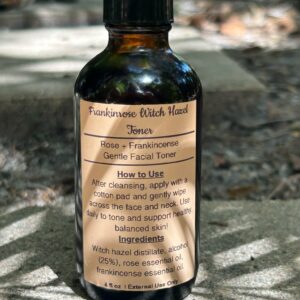
FrankinRose Witch Hazel Toner
$39.00 Add to cart -
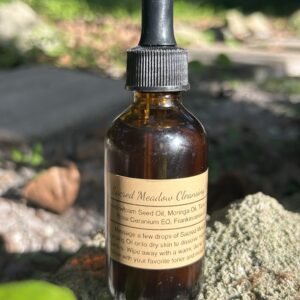
Sacred Meadow Cleansing Oil
Price range: $25.00 through $61.00Select options This product has multiple variants. The options may be chosen on the product pageClear1oz2oz4oz -
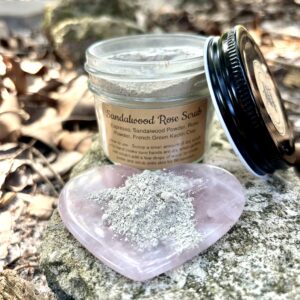
Sandalwood Rose Face Scrub
$37.00 Add to cart
One Jar, Six Herbs, Zero Filler
Grass-fed & finished, whipped in small batches, infused with intention.
Frequently Asked Questions
Is grass-fed tallow really different from regular tallow?
Yes. Fat stores what the animal ate, so pasture-raised suet carries meaningfully more of the fat-soluble vitamins A, D, E, and K than grain-finished fat. On a label, look for “grass-fed and grass-finished” together.
What’s the difference between suet tallow and regular beef fat?
Suet is the clean, dense fat from around the kidneys — it renders into the whitest, mildest, most stable tallow. “Beef fat” can mean trim from anywhere, which renders greasier and carries more scent.
Should tallow be the only ingredient?
Pure tallow is wonderful, but well-chosen partners earn their place: mango butter for texture, herb-infused oils for targeted skin support, vitamin E for freshness. What you want to avoid is filler — cheap oils that only stretch the batch.
Which tallow is best for sensitive skin?
The simplest, cleanest jar you can find: grass-fed and finished, gently rendered, with calming herbs like calendula and lavender rather than fragrance oils. Patch-test anything new, tallow included.
Sources & Further Reading
- USDA FoodData Central — composition of beef tallow (fatty acids, vitamins).
- MedlinePlus: Herbal Medicine — general safety guidance for botanical preparations.
From the Apothecary
-
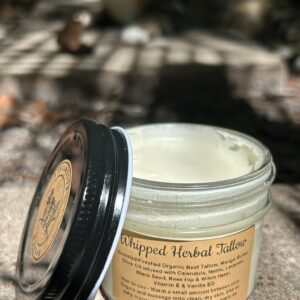
Herbal Whipped Beef Tallow
$37.00 Add to cart -
Sandalwood Rose Face Scrub
$37.00 Add to cart -
Sacred Meadow Cleansing Oil
Price range: $25.00 through $61.00Select options This product has multiple variants. The options may be chosen on the product pageClear1oz2oz4oz -
FrankinRose Witch Hazel Toner
$39.00 Add to cart
These statements are shared in the spirit of traditional wisdom and have not been evaluated by the Food & Drug Administration. Our products are not intended to diagnose, treat, cure, or prevent any disease. Consult your care provider before use if pregnant, nursing, or taking medications.